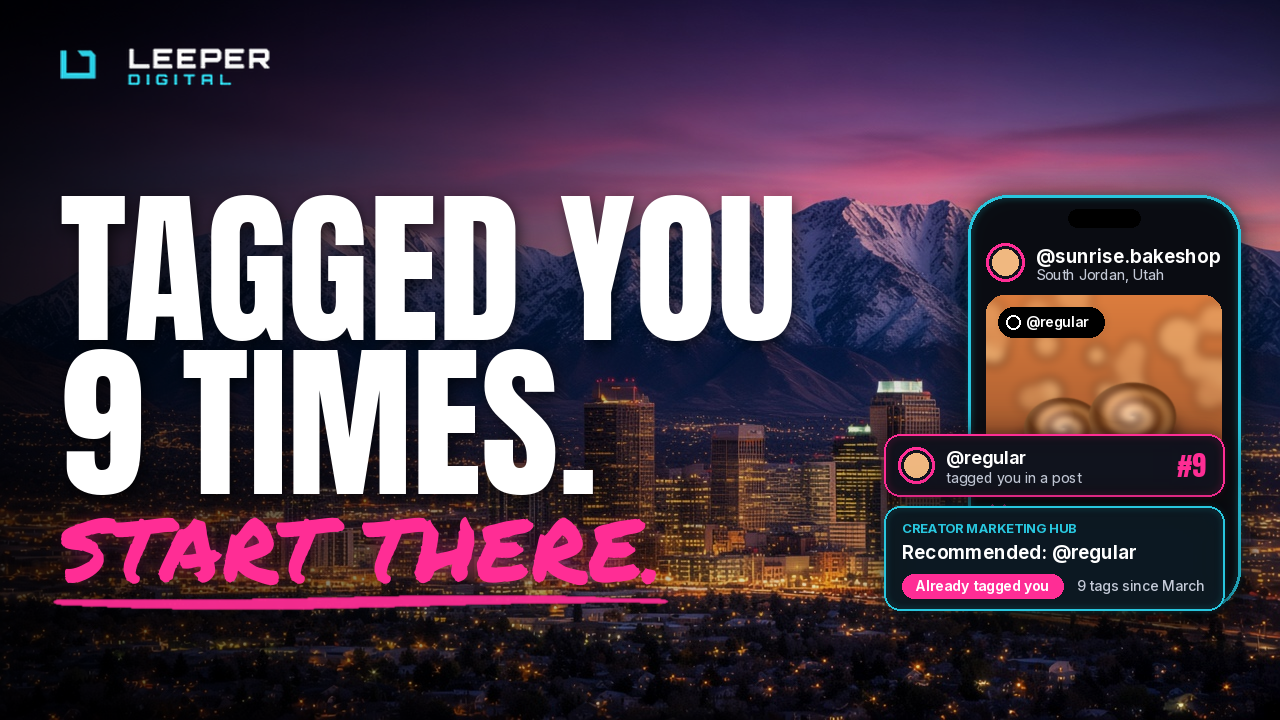
A bakery in South Jordan pays a lifestyle account with 180,000 followers to post a croissant. The croissant looks great. The comments say "omg" in four languages. Two of the followers live in Utah. Saturday traffic is the same as every Saturday.
Meanwhile, a mom in Daybreak has posted that same bakery's cinnamon rolls nine times since March, tagged it every time, and has never been asked for anything. Not even a thank-you.
One of these people is the bakery's influencer program. It's not the one who got paid.
What Changed This Fall
In mid-September, Meta rolled Creator Marketplace and Partnership Ads Hub into one workspace called the Creator Marketing Hub, launched globally. According to Socialday's breakdown, its recommendation rails highlight creators who have already tagged your brand in their content, and creators who have said they want to partner with you. Discovery is shifting from "who's big" to "who already cares."
That's a platform quietly admitting what local businesses could have told it for free: the person who posts about you unprompted is worth more than the person who posts about you on invoice.
The rest of the industry is drifting the same way. CreatorIQ's 2026 State of Creator Marketing report, with more than 2,000 respondents, found brands rank AI-related issues (AI-generated content, AI influencers, missing disclosure) as the top threat to trust in creator marketing, at 44%. And in Glossy's research, Aerie's CMO described creator marketing as "much more community-driven."
Translation: real people, real relationships, posted on purpose. That's a system, not a transaction. And most of it costs attention, not ad budget.
The Shoutout Is Not the Strategy
A one-off paid post is a firework. It's bright, it's loud, and the next morning your parking lot is exactly as empty. An organic creator system is closer to a sprinkler: boring, scheduled, and the reason the lawn is green in August.
Here's how you build one.
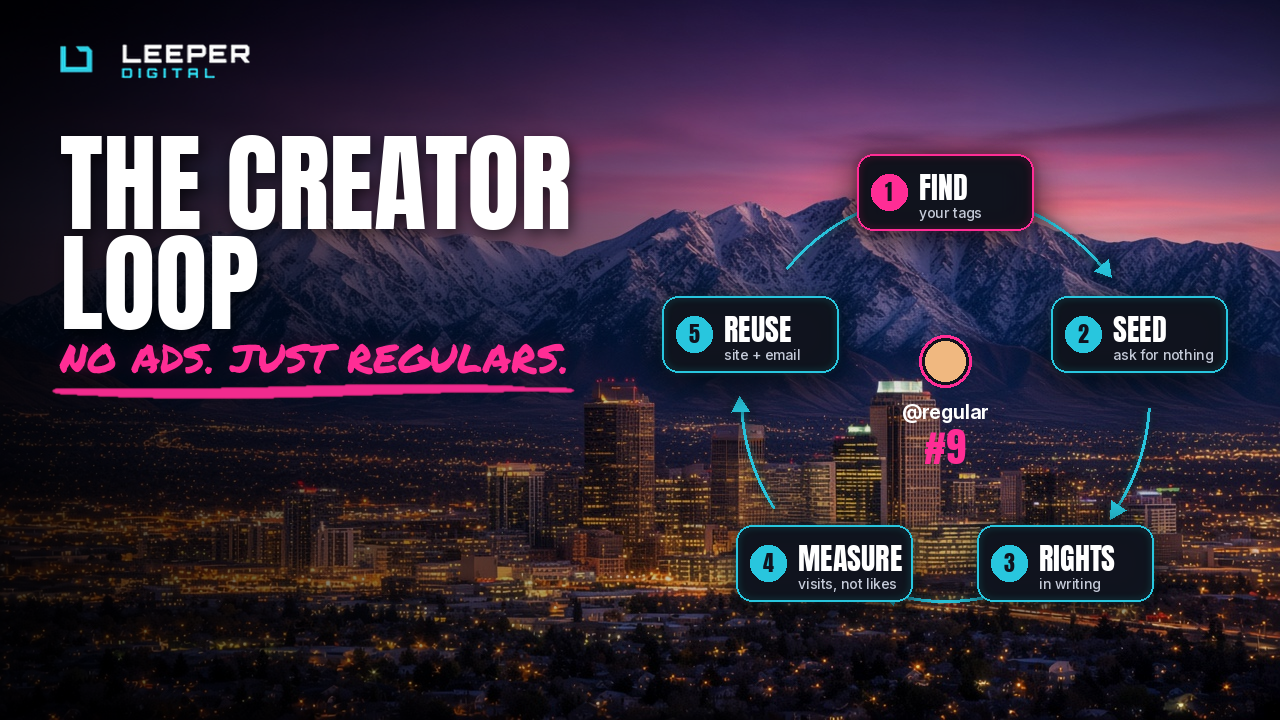
1. Pick Creators You Can Drive To
Start with the people already in your orbit, in this order:
- Customers who post. Search your tags, your mentions, and your location tag. Those people are now literally what Meta's tools put at the top of the list.
- Local micro and nano creators. Someone with 3,000 followers in Riverton beats someone with 300,000 in Miami if your business has a parking lot in Riverton.
- Your own employees. The tech who films a clean install. The barista with opinions about oat milk. They already have the content; they just think it's not allowed.
Fit beats reach. If you can't picture the creator walking in your front door, keep scrolling.
There's a quiet advantage here for Utah businesses: the Salt Lake Valley has a tight, active Deaf community, and Deaf creators who sign their reviews reach an audience most brands never bother to talk to. Captioned, signed, specific content travels further than a voiceover nobody can turn on in a meeting.
2. Run the Seeding Loop
Seeding means giving something before asking for anything: a product, a first look, a seat at the soft opening. No script. No required post. The point is to see who talks about you because they want to.
Then repeat it. Monthly, seasonally, whenever you launch something. The people who post twice without being asked are your shortlist. The ones who post zero times were polite, which is also nice.
Keep a simple sheet: name, handle, what you sent, what they posted, how it did. That sheet is the whole "influencer platform" for most local businesses, and it doesn't charge a seat license.
3. Get the Rights in Writing
A customer posting your tacos is not permission to put your tacos (and their face) on your homepage. Ask. A DM that says "Can we repost this and use it on our site, with credit?" and a "yes" in reply is the minimum. For anything bigger, use a short written agreement covering where it can be used and for how long.
And disclosure isn't optional when there's something in it for them. Free product counts. Make sure creators label it, and make it easy by telling them how.
4. Measure Like a Skeptic
You don't need a dashboard with a gradient. You need three things:
- A unique code or link per creator, so sales and bookings can be traced to a person, not a vibe.
- Mention tracking: tags, comments, "my friend saw this" at the counter. Ask new customers how they heard about you, and write it down.
- A monthly look back at the sheet. Who drove visits? Who drove only likes? Likes are applause. Applause doesn't pay rent.
Keep the creators who move real numbers. Thank the rest warmly and stop sending them croissants.
5. Turn Their Content Into Your Content
This is the step everyone skips, and it's where the system pays you back. With rights in hand, creator content becomes:
- Product and service page photos that look like real life instead of a stock catalog.
- Testimonial clips for your Google Business Profile and your site.
- Email content that doesn't require you to film anything.
- The raw material for next month's posts on your own accounts.
One good creator video can feed you for weeks. Paid reach disappears when the budget does. Owned content just sits there being useful.
The Checklist
- [ ] Search your tags, mentions and location tag; list everyone who already posts about you
- [ ] Add 5–10 local micro creators whose audience lives within driving distance
- [ ] Ask two employees if they'd like to post about their work, with no pressure
- [ ] Seed something with no required post, then note who talks
- [ ] Get written repost and usage permission before reusing anything
- [ ] Make sure anyone who got something for free discloses it
- [ ] Give every active creator a unique code or link
- [ ] Review the sheet monthly; keep who moves numbers
- [ ] Move the best creator content onto your site, profile and email
The Short Version
The platforms are now built to find the people who already like you. The only question is whether anyone does, and whether you've ever said thank you.
If you want help building a creator system that runs on relationships instead of boosts, email [email protected] or reach out at leeperdigital.com/contact/.